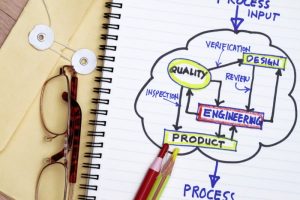
The world of product design and innovation is a dynamic landscape where creativity, technology, and user needs converge. It’s a journey from initial concept to market launch, demanding meticulous planning, insightful research, and a deep understanding of the target audience. This exploration delves into the core principles, processes, and strategies that drive successful product development, highlighting the critical role of user research, agile methodologies, and sustainable practices.
We’ll examine the entire product lifecycle, from initial ideation and prototyping through to launch and post-launch analysis. We’ll explore diverse innovation models, discuss ethical considerations, and showcase successful examples across various industries, offering a holistic view of this multifaceted field.
Defining Product Design and Innovation
Product design and innovation are intrinsically linked, driving the creation of new and improved products that meet evolving user needs and market demands. Product design focuses on the practical and aesthetic aspects of a product, encompassing its functionality, usability, and overall experience. Innovation, in this context, refers to the process of developing new ideas and translating them into commercially viable products.
This synergistic relationship ensures products are not only functional but also desirable and competitive.
The core principles of product design revolve around understanding user needs, creating intuitive interfaces, and ensuring the product is both functional and aesthetically pleasing. A well-designed product considers factors like ergonomics, materials, manufacturing processes, and environmental impact. It’s a holistic approach, balancing technical feasibility with user experience and market viability. This holistic approach ensures that the final product is not only functional but also caters to the specific needs and desires of its target audience.
This results in a product that is both efficient and enjoyable to use.
Stages in the Product Design Process
The product design process typically follows a structured approach, although the specifics may vary depending on the industry and product complexity. Generally, it involves ideation, research, prototyping, testing, and refinement. Each stage builds upon the previous one, iteratively improving the design until a final, marketable product is achieved.
The initial stages focus on understanding the problem, identifying user needs, and generating potential solutions. This involves market research, user interviews, and competitive analysis. Subsequent stages involve translating these ideas into tangible prototypes, testing these prototypes with users, and iteratively refining the design based on feedback. This iterative process ensures that the final product effectively addresses user needs and meets market expectations.
This cyclical process continues until a satisfactory level of design refinement is achieved.
Examples of Successful Product Design Innovations
Numerous examples showcase the power of product design innovation across diverse industries. The Apple iPhone revolutionized mobile communication with its intuitive interface and sleek design. Similarly, the Tesla Model S redefined electric vehicles by combining high performance with sustainable technology and elegant aesthetics. In the medical field, minimally invasive surgical tools have significantly improved patient outcomes through innovative design and engineering.
These examples demonstrate the transformative potential of well-executed product design.
Comparison of Design Philosophies
Different design philosophies can significantly impact the final product. A comparison of contrasting approaches highlights the trade-offs and considerations involved in product development.
| Design Philosophy | Focus | Strengths | Weaknesses |
|---|---|---|---|
| User-Centered Design | User needs and experience | High user satisfaction, improved usability, increased market acceptance | Can be time-consuming, potentially higher development costs |
| Technology-Driven Design | Technological capabilities and advancements | Innovation, potential for breakthrough products, competitive advantage | May neglect user needs, potential for poor usability, risk of market failure |
The Role of User Research in Product Design
User research is the cornerstone of successful product design. By understanding the needs, behaviors, and motivations of the target audience, designers can create products that are not only functional but also enjoyable and valuable to users. Ignoring user research often leads to products that fail to meet user expectations, resulting in low adoption rates and ultimately, market failure.
A robust user research strategy ensures that the design process is user-centered, maximizing the chances of creating a successful product.
Effective user research employs a variety of methods to gather insightful data. These methods allow designers to understand user needs on multiple levels, from explicit stated preferences to implicit, subconscious behaviors. The iterative nature of design relies heavily on incorporating this data to continuously refine and improve the product throughout its development lifecycle.
User Research Methods in Product Design
User research methods encompass a broad spectrum of techniques, each offering unique insights. Qualitative methods focus on understanding the “why” behind user behavior, while quantitative methods focus on measuring and quantifying user experiences. A balanced approach, utilizing both, is typically most effective. Examples of common methods include:
- User Interviews: Structured or semi-structured conversations with individual users to explore their needs, experiences, and opinions regarding a product or service. These can be conducted in person or remotely via video conferencing.
- Focus Groups: Moderated discussions with small groups of users to explore a specific topic or product concept. The group dynamic can reveal insights that individual interviews might miss.
- Surveys: Distributed questionnaires used to gather quantitative and qualitative data from a large number of users. They can be used to assess user satisfaction, identify preferences, and collect demographic information.
- Usability Testing: Observing users as they interact with a prototype or existing product to identify usability issues and areas for improvement. This often involves recording the user’s screen and actions, along with their verbal feedback.
- A/B Testing: Comparing two versions of a design element (e.g., button color, layout) to determine which performs better in terms of user engagement or conversion rates. This is a quantitative method often used later in the design process.
The Importance of User Feedback in Iterative Design
User feedback is crucial for iterative design, a cyclical process where design decisions are continuously refined based on user input. Each iteration involves designing, prototyping, testing, and iterating based on the feedback received. This iterative approach allows for the early detection and correction of usability issues and design flaws, ultimately leading to a more user-friendly and successful product. Without iterative design incorporating user feedback, the risk of launching a product that misses the mark is significantly higher.
For example, consider the development of a mobile app; initial user testing might reveal that the navigation is confusing, leading to design changes that simplify the user journey in the next iteration.
A Hypothetical User Research Plan for a New Smart Home Device
Let’s consider a new smart home device, a voice-activated coffee maker. A comprehensive user research plan would include the following stages:
- Competitive Analysis: Research existing smart home coffee makers to identify best practices and areas for improvement.
- User Interviews: Conduct interviews with potential users to understand their current coffee-making routines, their needs and pain points, and their expectations for a smart coffee maker.
- Usability Testing: Once a prototype is developed, conduct usability testing with participants to identify any usability issues or areas for improvement in the user interface and functionality.
- A/B Testing: Test different versions of the voice commands and user interface to determine which is most intuitive and effective.
- Post-Launch Feedback: Collect user feedback after the product launch through app reviews, surveys, and social media monitoring to identify areas for future improvements and updates.
Results of a Fictional User Study
A fictional user study for the smart coffee maker yielded the following key findings and recommendations:
- Key Finding 1: Users found the initial voice commands confusing and inconsistent. Recommendation: Simplify voice commands and improve voice recognition accuracy.
- Key Finding 2: The mobile app interface was deemed cluttered and difficult to navigate. Recommendation: Redesign the app interface to be more intuitive and user-friendly.
- Key Finding 3: Users desired more customization options, such as the ability to schedule brewing times and adjust coffee strength. Recommendation: Add more customization options to the device and app.
- Key Finding 4: Users appreciated the convenience of voice control but expressed concern about potential privacy implications. Recommendation: Clearly communicate data privacy policies and offer users options to control data collection.
The Product Development Lifecycle
The product development lifecycle (PDLC) is a structured process that guides the creation of a new product, from its initial concept to its launch and beyond. Understanding and effectively managing each stage is crucial for minimizing risk, maximizing efficiency, and ultimately, delivering a successful product. A well-defined PDLC ensures that resources are allocated appropriately, timelines are realistic, and the final product meets market demands and user expectations.The PDLC typically involves several iterative stages, each building upon the previous one.
Prototyping and testing are integral throughout, allowing for continuous improvement and adaptation based on user feedback and market analysis. While the specific stages and their durations can vary depending on the product’s complexity and the organization’s methodology, the fundamental principles remain consistent.
Stages of the Product Development Lifecycle
The typical stages are: Ideation, Research & Planning, Design & Prototyping, Development, Testing & Quality Assurance, Launch, and Post-Launch. Each phase plays a critical role in the overall success of the product. Inadequate attention to any single stage can negatively impact the final outcome.
The Importance of Prototyping and Testing
Prototyping allows for tangible representation of design concepts, facilitating early feedback and iteration. Testing, at every stage, ensures functionality, usability, and overall quality. Early and continuous testing significantly reduces the cost and time associated with fixing issues later in the development process. Testing can range from informal usability tests with a small group to rigorous beta testing with a larger audience.
The type and scale of testing should be adjusted based on the stage of development and the risk involved.
Process Flow Diagram for a Hypothetical New Software Application
The following table Artikels a simplified process flow for developing a new mobile productivity app called “TaskMaster”.
| Stage | Activities | Prototyping/Testing |
|---|---|---|
| Ideation | Brainstorming, market research, defining target audience, initial feature list. | Low-fidelity wireframes, user story mapping. |
| Research & Planning | Competitive analysis, user research (interviews, surveys), defining product specifications, creating a project plan. | User flow diagrams, persona development, usability testing of initial wireframes. |
| Design & Prototyping | UI/UX design, high-fidelity prototyping, creating design specifications. | Usability testing of prototypes, A/B testing of design elements. |
| Development | Coding, software development, database design, API integration. | Unit testing, integration testing, system testing. |
| Testing & Quality Assurance | Bug fixing, performance testing, security testing, user acceptance testing (UAT). | Beta testing with a select group of users, gathering feedback and addressing issues. |
| Launch | Deployment to app stores, marketing and promotion, user onboarding. | Monitoring app performance and user feedback after launch. |
| Post-Launch | Monitoring user feedback, iterative improvements, feature additions, bug fixes. | Continuous monitoring of user behavior, A/B testing of new features. |
Timeline for Product Development
This is a sample timeline and the duration of each phase can vary significantly.
| Phase | Typical Duration | Example |
|---|---|---|
| Ideation | 1-2 months | Initial brainstorming and market research for a new social media app. |
| Research & Planning | 2-3 months | Conducting user interviews and defining the app’s core features. |
| Design & Prototyping | 2-4 months | Creating high-fidelity prototypes and conducting usability testing. |
| Development | 6-12 months | Coding, testing, and debugging of the app’s core functionality. |
| Testing & QA | 1-2 months | Extensive testing to identify and fix bugs and improve performance. |
| Launch | 1 month | App store submission, marketing, and user onboarding. |
| Post-Launch | Ongoing | Continuous monitoring, updates, and feature additions. |
Ultimately, successful product design and innovation hinge on a deep understanding of user needs, a commitment to iterative development, and a proactive approach to incorporating feedback. By embracing user-centric design, agile methodologies, and sustainable practices, businesses can create products that not only meet market demands but also contribute positively to society and the environment. The journey is ongoing, constantly evolving with technological advancements and shifting consumer preferences, demanding continuous learning and adaptation.
FAQ Section
What is the difference between product design and product development?
Product design focuses on the aesthetics, functionality, and user experience of a product, while product development encompasses the entire process from ideation to launch, including engineering, manufacturing, and marketing.
How important is prototyping in the design process?
Prototyping is crucial as it allows for early testing and feedback, enabling designers to identify and address potential issues before significant resources are invested in production.
What are some common pitfalls to avoid in product design?
Common pitfalls include neglecting user research, failing to iterate based on feedback, and overlooking ethical and sustainability considerations.
How can I measure the success of a new product?
Success can be measured through various metrics such as sales figures, customer satisfaction ratings, market share, and return on investment (ROI).