
Sustainable product innovation represents a paradigm shift in how businesses approach design, manufacturing, and distribution. It moves beyond simply creating profitable products to encompass environmental responsibility, social equity, and long-term economic viability. This integrated approach necessitates a holistic view of a product’s entire lifecycle, from material sourcing to end-of-life management, prioritizing resource efficiency and minimizing negative impacts.
This guide delves into the core principles of sustainable product innovation, exploring practical strategies and real-world examples to illustrate how companies are successfully integrating sustainability into their product development processes. We will examine life cycle assessments, eco-friendly materials, sustainable packaging, circular economy principles, and effective marketing strategies for launching sustainable products.
Sustainable Packaging and End-of-Life Management
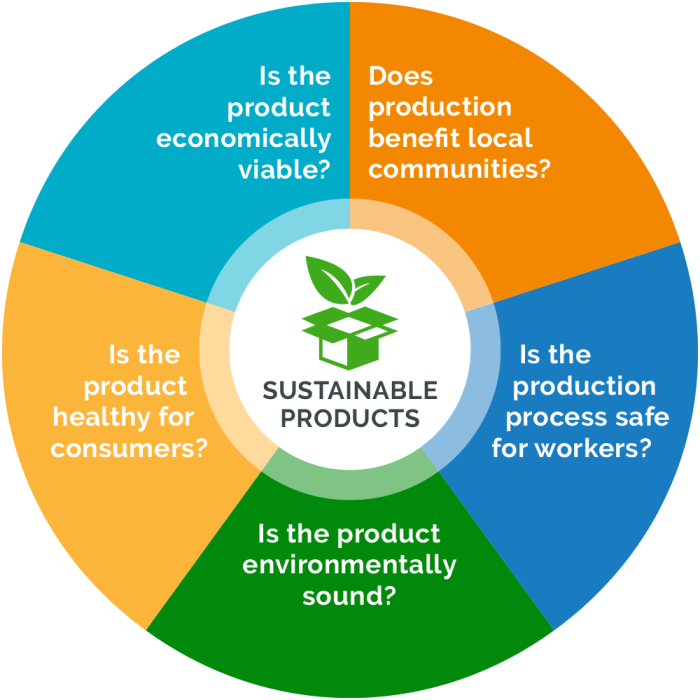
Sustainable packaging and responsible end-of-life management are crucial aspects of creating truly sustainable products. Minimizing environmental impact throughout a product’s lifecycle requires careful consideration of materials, design, and disposal methods. This involves moving beyond simply reducing waste to actively promoting circularity and resource efficiency.Designing sustainable packaging necessitates a holistic approach, considering the entire journey from raw material sourcing to final disposal.
This section will explore key strategies for reducing waste and pollution associated with packaging, improving recyclability, and establishing effective end-of-life management plans.
Strategies for Designing Sustainable Packaging
Sustainable packaging design prioritizes the use of renewable and recycled materials, minimizing material usage, and optimizing design for recyclability or compostability. This includes exploring biodegradable alternatives to traditional plastics, designing for reduced weight and volume, and employing innovative packaging structures that improve efficiency and reduce material waste. For example, using lightweight, recyclable cardboard instead of heavy plastic containers significantly reduces transportation emissions and landfill waste.
Furthermore, utilizing post-consumer recycled content in packaging reduces the demand for virgin materials and decreases the environmental burden associated with extraction and processing.
Methods for Improving Product Recyclability and End-of-Life Management
Improving product recyclability involves designing products and their packaging with end-of-life considerations in mind. This includes using readily recyclable materials, avoiding material combinations that hinder recycling processes, and clearly labeling packaging with recycling instructions. For example, designing a product with easily separable components made from a single type of recyclable material simplifies the recycling process and increases the likelihood of successful material recovery.
Furthermore, implementing extended producer responsibility (EPR) schemes encourages manufacturers to take responsibility for the end-of-life management of their products, incentivizing the design of recyclable and reusable products. Effective end-of-life management also includes exploring options like composting for biodegradable materials and energy recovery for non-recyclable waste.
Responsible Disposal or Recycling Plan for a Reusable Water Bottle
A comprehensive plan for the responsible disposal or recycling of a reusable water bottle, focusing on consumer education and participation, is vital. This involves providing clear and accessible information on the product’s material composition and proper disposal or recycling methods.
The following plan Artikels steps for responsible end-of-life management of a stainless steel water bottle:
- Material Composition: Clearly label the bottle as made from 100% stainless steel (or specify the percentage if other materials are used, such as silicone for the lid).
- Recycling Instructions: Provide clear instructions on the bottle and packaging about how to recycle or dispose of the product properly, emphasizing that the stainless steel body is recyclable.
- Consumer Education: Include information on local recycling programs and drop-off locations on the product website and packaging.
- Product Longevity: Design the bottle for durability and long-term use, encouraging customers to repair rather than replace the bottle.
- Take-Back Program (Optional): Consider establishing a take-back program for end-of-life bottles to ensure proper recycling and responsible material recovery.
- Partnerships: Collaborate with recycling organizations and waste management facilities to optimize recycling processes and ensure that the collected materials are properly processed.
Circular Economy Principles in Product Innovation
The circular economy represents a fundamental shift from the traditional linear “take-make-dispose” model to a more sustainable system. It prioritizes keeping resources in use for as long as possible, extracting maximum value from them while in use, then recovering and regenerating products and materials at the end of each service life. This requires a radical rethink of product design and manufacturing processes, placing a strong emphasis on durability, repairability, and recyclability.The core principles of a circular economy are directly applicable to product innovation.
By designing products with these principles in mind, companies can significantly reduce their environmental impact and contribute to a more sustainable future. This involves a holistic approach, considering the entire lifecycle of a product from raw material extraction to end-of-life management. This includes focusing on design for durability, repairability, and recyclability, and developing strategies for reuse, refurbishment, and recycling.
Product Design for Durability, Repairability, and Recyclability
Designing for durability involves creating products that are built to last. This reduces the need for frequent replacements, minimizing resource consumption and waste generation. For instance, a well-designed bicycle frame, constructed from high-quality materials and employing robust engineering principles, can last for decades with minimal maintenance. Repairability focuses on designing products that can be easily repaired when they malfunction.
This reduces the need for disposal and extends the product’s lifespan. Modular design, where components can be easily replaced or upgraded, is a key element of repairable products. A prime example is the Fairphone, a modular smartphone designed for easy repair and component replacement. Finally, recyclability considers the ease with which a product can be disassembled and its materials recycled at the end of its life.
This requires careful material selection and design for disassembly, minimizing the use of mixed materials and hazardous substances. Many electronics manufacturers are now designing products with readily separable components to improve recyclability.
Facilitating Reuse, Refurbishment, and Recycling
Product design plays a crucial role in facilitating reuse, refurbishment, and recycling. Design for disassembly, for example, allows products to be easily taken apart at the end of their useful life, enabling the recovery of valuable materials. This contrasts sharply with products designed for disposability, where components are often bonded together making separation and recycling extremely difficult or impossible.
Refurbishment involves repairing and restoring used products to like-new condition. Design features that simplify repair and component replacement directly support refurbishment initiatives. For instance, the use of standardized parts and readily accessible repair manuals enhances the feasibility of refurbishment. Finally, efficient recycling processes require products to be designed with material separation and recyclability in mind. Using easily recyclable materials, such as aluminum or certain plastics, and avoiding the use of hazardous substances simplifies the recycling process and improves the quality of recycled materials.
The success of initiatives like bottle deposit schemes and the increasing demand for recycled materials highlight the effectiveness of these strategies.
Measuring the Impact of Sustainable Product Innovation
Measuring the environmental and social impact of sustainable product innovation is crucial for demonstrating its effectiveness and driving further improvements. This involves identifying relevant Key Performance Indicators (KPIs), establishing robust tracking methods, and transparently reporting the results throughout the product’s lifecycle. This allows businesses to understand their progress, identify areas for improvement, and communicate their sustainability efforts effectively to stakeholders.
Key Performance Indicators (KPIs) for Sustainable Product Impact
Effective measurement requires a carefully selected set of KPIs that reflect both environmental and social aspects. These KPIs should be specific, measurable, achievable, relevant, and time-bound (SMART). A balanced scorecard approach, considering environmental, social, and economic dimensions, is often beneficial.
Methods for Tracking and Reporting Sustainability Performance
Tracking and reporting on sustainability performance requires a systematic approach, integrating data collection across the entire product lifecycle. This includes material sourcing, manufacturing, distribution, use, and end-of-life management. Data can be gathered through various methods, including material flow analysis, life cycle assessment (LCA), environmental product declarations (EPDs), and social impact assessments. Regular reporting, using standardized frameworks like the Global Reporting Initiative (GRI) standards, ensures transparency and accountability.
KPIs Table: Metric, Measurement Method, and Target Value
| KPI | Metric | Measurement Method | Target Value (Example) |
|---|---|---|---|
| Carbon Footprint Reduction | Greenhouse gas emissions (kg CO2e per unit) | Life Cycle Assessment (LCA) | 20% reduction compared to previous product version within 3 years |
| Water Consumption Reduction | Water usage (liters per unit) | Process water monitoring and LCA | 15% reduction within 2 years |
| Waste Reduction | Waste generated (kg per unit) | Waste audit and material tracking | 10% reduction within 1 year |
| Recycled Content | Percentage of recycled materials (%) | Material composition analysis | 50% recycled content within 5 years |
| Renewable Energy Use | Percentage of renewable energy used in manufacturing (%) | Energy consumption data from suppliers | 100% renewable energy within 5 years |
| Fair Labor Practices | Compliance with fair labor standards (%) | Supplier audits and social impact assessments | 100% compliance |
| Product Durability | Average product lifespan (years) | Customer surveys and warranty data | Increase by 20% compared to previous product |
| Product Recyclability | Percentage of product components recyclable (%) | Design for recyclability analysis | 90% recyclable components |
| Customer Satisfaction with Sustainability | Customer satisfaction rating (scale of 1-5) | Customer surveys | Average rating of 4.5 or higher |
Product Innovation and Product Launch Strategies for Sustainable Products
Launching a sustainable product requires a multifaceted approach that goes beyond simply highlighting its eco-friendly attributes. Success hinges on a well-defined strategy encompassing compelling marketing, transparent communication, and a deep understanding of the target audience. This involves not only showcasing the product’s environmental benefits but also building trust and demonstrating a genuine commitment to sustainability.Effective marketing and communication strategies are crucial for the successful launch of any product, but especially for sustainable ones.
Consumers are increasingly discerning, demanding transparency and proof of a product’s claims. A successful launch relies on building a strong narrative that resonates with the target audience’s values and concerns.
Marketing and Communication Strategies for Sustainable Products
A successful marketing campaign for a sustainable product needs to clearly articulate its environmental benefits without resorting to “greenwashing.” This means focusing on tangible, verifiable aspects of the product’s sustainability, such as reduced carbon footprint, use of recycled materials, or biodegradable packaging. The messaging should be authentic and resonate with the values of the target audience, avoiding overly technical or jargon-filled language.
The campaign should also emphasize the product’s functionality and quality, ensuring it meets consumer expectations. Multi-channel marketing, incorporating social media, influencer collaborations, and public relations, is essential for reaching a broad audience.
Transparency and Traceability in Communicating Sustainability Credentials
Transparency and traceability are paramount in building consumer trust. Consumers are more likely to purchase sustainable products if they can verify the claims made by the manufacturer. This involves providing detailed information about the product’s lifecycle, from sourcing materials to end-of-life management. Traceability can be achieved through blockchain technology, QR codes linking to detailed product information, or certifications from reputable organizations.
Openly communicating the product’s environmental impact, including any limitations, is essential for building trust and fostering long-term loyalty. Hiding information or making unsubstantiated claims can severely damage a brand’s reputation.
Hypothetical Marketing Plan for a Sustainable Product
Let’s consider a hypothetical launch of “EcoBloom,” a line of biodegradable cleaning products made with plant-based ingredients and packaged in recycled and recyclable materials.Target Audience: Environmentally conscious consumers aged 25-55, with a focus on households with young children or pets, concerned about the impact of household chemicals on their families and the planet.Messaging: EcoBloom’s messaging emphasizes the product’s effectiveness, safety, and environmental benefits.
The campaign highlights the plant-based ingredients, the biodegradable formula, and the recycled packaging. The core message emphasizes “Clean home, healthy planet.”Channels: The marketing campaign will utilize a multi-channel approach. Social media marketing will focus on Instagram and Facebook, featuring visually appealing content showcasing the product’s natural ingredients and sustainable packaging. Influencer collaborations with eco-conscious bloggers and YouTubers will be leveraged to build brand awareness and trust.
Public relations efforts will target relevant media outlets, focusing on the product’s unique features and its positive environmental impact. Partnerships with environmentally focused retailers and online marketplaces will ensure wide distribution. Finally, the company website will provide detailed information about the product’s sustainability credentials, including certifications and lifecycle assessments.
Case Studies
Successful sustainable product launches demonstrate the viability and growing market demand for environmentally conscious products. Analyzing these launches reveals valuable insights into effective strategies, challenges encountered, and ultimately, how to achieve positive environmental and business outcomes. The following case studies illustrate diverse approaches to sustainable product innovation, highlighting best practices and lessons learned.
Patagonia’s Worn Wear Program
Patagonia, a leading outdoor apparel company, has successfully implemented a Worn Wear program, focusing on extending the life of its products through repair, resale, and recycling. This initiative addresses the significant environmental impact of textile waste. The program includes a robust online platform for buying and selling used Patagonia clothing, as well as in-store repair services. Challenges included scaling the program to meet increasing demand and managing the logistics of collecting and processing used garments.
Lessons learned emphasized the importance of building a strong community around repair and reuse, investing in robust logistics, and transparently communicating the program’s environmental benefits to consumers. The success of Worn Wear has significantly increased customer loyalty and brand reputation while promoting a circular economy model.
Unilever’s Sustainable Packaging Initiatives
Unilever, a global consumer goods giant, has undertaken numerous initiatives to reduce the environmental impact of its packaging. This includes a commitment to using 100% recyclable, reusable, or compostable packaging by 2025. Significant challenges involved sourcing sustainable materials at scale, adapting existing production lines, and educating consumers about proper recycling practices. Key lessons learned include the importance of collaborating with suppliers and partners across the value chain, investing in innovative packaging technologies, and engaging consumers through clear and accessible communication about sustainability efforts.
The results have included a significant reduction in plastic waste and improved brand perception among environmentally conscious consumers. Unilever’s commitment demonstrates that large corporations can play a crucial role in driving sustainable packaging solutions.
Interface’s Mission Zero
Interface, a global flooring company, has implemented its ambitious “Mission Zero” program, aiming to eliminate its negative environmental impact by 2020. While the 2020 target was not fully met, significant progress was made in reducing carbon emissions, waste, and water usage throughout its operations and supply chain. Challenges included measuring and tracking environmental impacts across a complex global supply chain and fostering collaboration with suppliers to adopt sustainable practices.
Key learnings focused on the importance of setting ambitious yet achievable goals, establishing transparent metrics for tracking progress, and fostering a culture of continuous improvement. The program demonstrated that ambitious sustainability targets can drive innovation and create business value, even if the initial goal isn’t completely achieved within the timeframe. Interface’s continuous improvement approach provides a valuable model for other companies striving for ambitious sustainability goals.
Comparison of Sustainable Product Launch Approaches
| Company | Product | Launch Strategy | Results |
|---|---|---|---|
| Patagonia | Worn Wear Program | Online platform for resale and repair, in-store repair services, community building | Increased customer loyalty, positive brand reputation, promotion of circular economy |
| Unilever | Sustainable Packaging Initiatives | Commitment to 100% recyclable/compostable packaging, collaboration with suppliers, consumer education | Significant reduction in plastic waste, improved brand perception |
| Interface | Mission Zero Program | Ambitious sustainability targets, transparent metrics, collaboration with suppliers, continuous improvement | Significant reductions in carbon emissions, waste, and water usage |
Ultimately, sustainable product innovation is not merely a trend but a necessity for long-term business success and planetary health. By embracing a circular economy model, prioritizing eco-friendly materials, and implementing robust life cycle assessments, businesses can create products that minimize environmental impact while maximizing social and economic benefits. The journey towards sustainability requires a commitment to transparency, continuous improvement, and collaboration across the entire value chain.
Detailed FAQs
What is the difference between sustainable and traditional product development?
Traditional product development primarily focuses on profitability and market demand, often neglecting environmental and social considerations. Sustainable product development integrates environmental, social, and economic factors throughout the entire product lifecycle, aiming for long-term value creation.
How can I measure the success of a sustainable product?
Success is measured through a combination of KPIs, including reduced environmental impact (carbon footprint, waste generation), improved social equity (fair labor practices, community engagement), and positive economic outcomes (profitability, market share). Tracking these metrics across the product lifecycle is crucial.
What are some common barriers to implementing sustainable product innovation?
Common barriers include higher upfront costs for sustainable materials, lack of consumer awareness, regulatory hurdles, and a lack of internal expertise and resources. Overcoming these challenges requires strategic planning, collaboration, and investment in innovation.
How can I ensure transparency and traceability in my sustainable product?
Transparency and traceability are achieved through clear and accessible information about material sourcing, manufacturing processes, and end-of-life management. Blockchain technology, certifications (e.g., B Corp), and clear labeling can enhance transparency and build consumer trust.


