
Launching a new product is a thrilling yet complex undertaking. Success hinges on meticulous planning, encompassing market research, strategic marketing, and a clear understanding of your target audience. This guide provides a comprehensive framework, walking you through each crucial step from initial concept to post-launch analysis, ensuring a smooth and impactful product introduction.
From defining your unique selling proposition and crafting compelling buyer personas to executing a robust pre-launch campaign and measuring post-launch success, we’ll explore the essential elements of a successful product launch plan. We’ll delve into various launch strategies, budget considerations, and methods for gathering valuable customer feedback to refine your product and maximize its market impact. This plan will equip you to navigate the complexities of product launches with confidence and achieve your desired results.
Market Research and Competitive Analysis
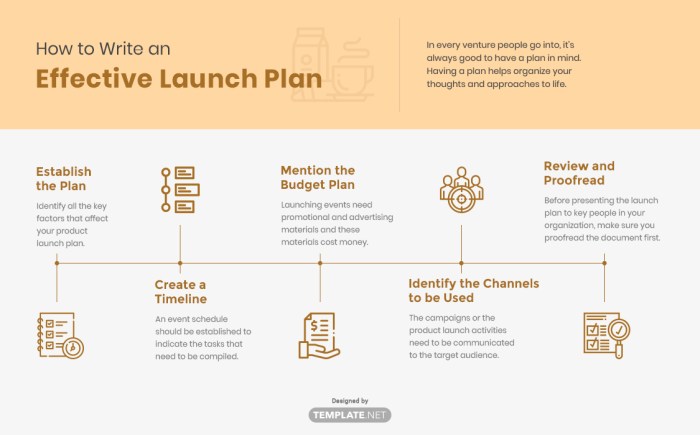
Understanding your market and competitive landscape is crucial for a successful product launch. A thorough market analysis provides the foundation for informed decision-making, allowing you to tailor your launch strategy for maximum impact. This section will Artikel the key steps involved in conducting effective market research and competitive analysis.
Market Size and Potential
The market for [Product Name] is estimated to be [Size] with a projected growth rate of [Percentage]% over the next [Number] years. This growth is driven primarily by [Key Market Drivers, e.g., increasing consumer demand for sustainable products, technological advancements]. This presents a significant opportunity for our product, which addresses [Specific Market Need] better than existing solutions. For example, the global market for smart home devices experienced a similar growth trajectory, reaching [Dollar Amount] in 2022, fueled by increasing consumer adoption of connected technology.
Our product’s unique features position it to capture a substantial share of this expanding market.
Current Market Trends and Emerging Opportunities
Several key trends are shaping the [Product Category] market. These include a growing preference for [Trend 1, e.g., eco-friendly products], increasing demand for [Trend 2, e.g., personalized experiences], and the rise of [Trend 3, e.g., subscription-based models]. We can leverage these trends by [Specific Action 1, e.g., highlighting our product’s sustainability features], [Specific Action 2, e.g., offering customized product options], and [Specific Action 3, e.g., developing a subscription service].
The emergence of [Emerging Technology/Trend] presents a further opportunity to innovate and differentiate our product in the future. For instance, the increasing popularity of voice-activated technology could be integrated into future versions of our product.
Competitor Analysis
Our main competitors are [Competitor 1], [Competitor 2], and [Competitor 3]. [Competitor 1] boasts strong brand recognition but lacks [Weakness 1, e.g., advanced features]. [Competitor 2] offers a competitive price point but suffers from [Weakness 2, e.g., poor customer service]. [Competitor 3] has a technologically advanced product, but it is [Weakness 3, e.g., expensive and complex to use]. This analysis reveals opportunities to differentiate our product by focusing on [Key Differentiators, e.g., ease of use, superior customer support, innovative features].
SWOT Analysis
A SWOT analysis of our product reveals the following:
| Strengths | Weaknesses |
|---|---|
| Superior performance | High initial cost |
| User-friendly interface | Limited customization options |
| Strong brand reputation (if applicable) | Relatively new to the market |
| Opportunities | Threats |
|---|---|
| Expanding market demand | Intense competition |
| Potential for strategic partnerships | Economic downturn (potential impact) |
| Technological advancements | Changing consumer preferences |
Pre-Launch Activities
The pre-launch phase is crucial for building anticipation and generating initial momentum for your product. A well-executed pre-launch strategy can significantly impact your launch day success, driving strong initial sales and establishing a loyal customer base. This section Artikels key activities to maximize your pre-launch impact.
Marketing Strategy
A comprehensive marketing strategy should leverage multiple channels to reach your target audience effectively. This includes a coordinated effort across social media, email marketing, and public relations. Social media platforms offer targeted advertising options and opportunities to engage directly with potential customers. Email marketing allows for personalized communication, nurturing leads and building anticipation. Public relations efforts can generate media coverage and build credibility for your product.
A successful campaign integrates these channels seamlessly, reinforcing key messages across all platforms. For example, a social media campaign could tease product features, linking to an email signup for exclusive updates and early access. Simultaneously, a PR outreach could secure features in relevant industry publications, further amplifying the message.
Content Calendar
A detailed content calendar ensures a consistent and engaging pre-launch campaign. This calendar should map out specific content pieces, their publication dates, and the channels they’ll be used on. Each piece should align with overarching campaign themes and messaging. For instance, a calendar might include social media posts highlighting key features, blog articles delving into product benefits, and email sequences building excitement leading up to the launch.
Themes might focus on problem-solving, showcasing unique selling propositions, or building a sense of community around the product. A well-structured calendar avoids content overlap and maintains a consistent brand voice.
Landing Page Design
A dedicated landing page is essential for capturing leads and generating excitement. This page should clearly communicate the product’s value proposition, include compelling visuals, and offer a clear call to action (e.g., email signup for updates, early bird discounts). The design should be clean, easy to navigate, and optimized for conversions. For example, a landing page could feature a high-quality product image, a concise description of its key benefits, and a prominent signup form with an enticing incentive, such as access to an exclusive webinar or a discount code.
A/B testing different versions of the landing page can help optimize its performance.
Influencer and Partner Collaboration
Identifying and collaborating with relevant influencers and partners can significantly extend your reach and build credibility. This involves researching individuals or organizations whose audience aligns with your target market. Partnering with influencers allows you to leverage their established audience and trust, while collaborations with complementary businesses can open up new markets. For example, partnering with a technology review blog could generate credible product reviews, while collaborating with a related business could offer cross-promotional opportunities.
Selecting the right partners is key to ensuring a positive and mutually beneficial relationship.
Product Launch Strategy
A well-defined product launch strategy is crucial for maximizing the impact of your new product. It provides a roadmap for execution, ensuring all activities are aligned and contribute to a successful market entry. A robust strategy encompasses a detailed timeline, a defined launch method, a comprehensive budget, and clear success metrics.A successful product launch requires meticulous planning and execution across several key areas.
This section Artikels the development of a detailed launch plan, considering timing, methodology, financial resources, and performance measurement.
Launch Timeline
Developing a detailed timeline is essential for effective project management. This timeline should identify key milestones and deadlines across all launch phases, from pre-launch activities to post-launch analysis. For example, a typical timeline might include milestones such as finalizing marketing materials (two months before launch), securing media coverage (one month before launch), and initiating customer support training (one week before launch).
Each milestone should have a clearly defined owner and realistic deadlines to ensure accountability and timely execution. Delays in any phase can impact the overall launch success, highlighting the importance of proactive planning and risk mitigation.
Launch Method Selection
The chosen launch method significantly impacts the overall strategy. Three common approaches are: a soft launch, a phased rollout, and a big bang launch. A
- soft launch* involves a limited release to a specific target audience to gather feedback and refine the product before a wider release. A
- phased rollout* gradually introduces the product to different market segments over time. A
- big bang launch* involves a simultaneous, widespread release across all target markets. The optimal method depends on factors such as product complexity, market readiness, and available resources. For instance, a complex software application might benefit from a phased rollout to allow for iterative improvements based on user feedback, whereas a consumer product with high demand might be suited to a big bang launch to generate significant initial buzz.
Launch Budget
Creating a detailed budget is crucial for managing resources effectively. The budget should Artikel the costs associated with each phase of the launch, including marketing, advertising, sales, customer support, and distribution. For example, a launch budget might allocate funds to social media advertising, influencer marketing, public relations, and event sponsorship. Regular monitoring and adjustments to the budget are necessary to ensure cost-effectiveness and prevent overspending.
Unexpected costs should be accounted for through contingency planning. For instance, a contingency fund could cover potential delays or unforeseen marketing expenses.
Success Measurement
Defining key performance indicators (KPIs) is vital for evaluating the success of the launch campaign. These metrics should align with the overall launch objectives and provide quantifiable data to assess progress. Examples of relevant KPIs include website traffic, conversion rates, sales figures, customer acquisition cost (CAC), and customer lifetime value (CLTV). Regular monitoring of these KPIs allows for timely adjustments to the launch strategy, ensuring optimal results.
For instance, if website traffic is lower than expected, the marketing team might adjust the digital advertising strategy. By continuously analyzing data, you can refine your approach and maximize the impact of your product launch.
Post-Launch Activities
The success of a product launch extends far beyond the initial fanfare. A robust post-launch plan is crucial for sustained growth, ensuring your product resonates with the market and achieves its long-term goals. This involves a multifaceted approach encompassing customer acquisition and retention, ongoing feedback mechanisms, consistent marketing, and proactive issue management.
Customer Acquisition and Retention Strategies
Post-launch, the focus shifts from generating pre-launch buzz to converting interest into sales and fostering customer loyalty. This requires a blend of strategic marketing initiatives and customer relationship management practices. For example, a targeted email campaign could nurture leads generated during the pre-launch phase, offering exclusive discounts or early access to new features. Simultaneously, a loyalty program could reward repeat customers, encouraging continued engagement and advocacy.
Another effective strategy is implementing a referral program, leveraging existing customers to expand your reach and acquire new ones organically. This multi-pronged approach ensures consistent growth and a strong customer base.
Gathering Customer Feedback and Product Iteration
Continuous improvement is paramount. A comprehensive feedback mechanism is essential to understand how your product performs in the real world and identify areas for enhancement. This could involve deploying in-app surveys, conducting user interviews, actively monitoring social media for mentions, and analyzing product usage data. For instance, analyzing user interaction data can reveal bottlenecks in the user experience, prompting design adjustments to improve usability.
Customer reviews, both positive and negative, provide valuable insights into user perception and satisfaction. This feedback loop fuels iterative development, ensuring the product consistently meets and exceeds customer expectations.
Ongoing Marketing and Support Efforts
Sustained marketing efforts are critical to maintaining visibility and driving continued sales. This involves a mix of paid advertising, content marketing (such as blog posts, articles, and social media updates), and community engagement. For example, a series of informative blog posts explaining the product’s features and benefits could attract new users and reinforce the value proposition for existing ones.
Equally important is providing excellent customer support. A readily accessible support channel (e.g., email, live chat, FAQ section) ensures users can quickly resolve issues, fostering a positive experience and reducing churn. Proactive communication, such as announcing new features or updates, keeps users engaged and informed.
Handling Potential Issues or Negative Reviews
No product launch is without its challenges. A proactive plan for addressing negative feedback and resolving issues is vital for maintaining reputation and customer trust. This involves establishing clear communication channels for handling complaints and implementing a system for tracking and resolving reported bugs or glitches. For instance, promptly responding to negative reviews with empathy and a commitment to resolution demonstrates accountability and strengthens customer relationships.
Furthermore, transparently communicating about known issues and providing updates on their resolution fosters trust and prevents negative sentiment from escalating. A swift and effective response mechanism mitigates the impact of negative experiences, turning potential crises into opportunities for improvement and strengthening customer loyalty.
Product Innovation and Product Launch
Our product, “SmartHomeSync,” represents a significant leap forward in home automation. It integrates various smart devices seamlessly, offering a unified control interface and predictive functionality that surpasses existing solutions. This addresses the growing market need for intuitive and efficient home management, particularly among busy professionals and families who value convenience and energy savings.SmartHomeSync’s innovative aspects include its AI-powered energy optimization engine, which learns user habits and adjusts energy consumption accordingly, resulting in significant cost savings.
Further innovation is reflected in its robust security features, incorporating multi-factor authentication and proactive threat detection, safeguarding user data and privacy. The intuitive user interface, designed with accessibility in mind, makes it user-friendly for all age groups.
Product Development Process
The development of SmartHomeSync involved a rigorous iterative process. The initial design phase focused on defining core functionalities and user experience, utilizing user feedback gathered through surveys and focus groups. This was followed by prototyping and rigorous testing, employing both internal QA teams and beta testers to identify and address potential issues. The refinement stage involved multiple rounds of design iterations, incorporating feedback to enhance usability and performance.
This process culminated in a stable, reliable, and user-friendly product ready for launch.
Launch Strategy Alignment with Product Vision
Our launch strategy is directly aligned with our long-term vision for SmartHomeSync: to become the leading platform for integrated home automation. We aim to achieve this through a phased approach. The initial phase focuses on targeted marketing campaigns aimed at early adopters and tech enthusiasts, leveraging social media and online advertising. The subsequent phases will involve expanding market reach through strategic partnerships with home appliance manufacturers and retailers, while simultaneously continuing product development to enhance functionalities and add new features based on user feedback.
This phased rollout minimizes risk and allows us to adapt our strategy based on real-world market response.
Comparison of Product Launch Approaches
Different product launch approaches can significantly impact the success of innovative products. A “big bang” launch, characterized by a simultaneous nationwide release with extensive marketing, is suitable for products with broad appeal and established brand recognition. This approach, however, carries higher risk and requires significant upfront investment. Alternatively, a phased rollout, as adopted for SmartHomeSync, allows for controlled market entry, facilitating data collection and iterative improvements based on real-time feedback.
This approach is particularly beneficial for innovative products with unique features, enabling a more tailored marketing strategy and reduced risk of market failure. A third approach, a “stealth” launch, focuses on limited initial release, building brand awareness organically through word-of-mouth marketing. This is suitable for products with niche appeal or requiring specific user feedback before wider release. The choice depends on various factors, including budget, risk tolerance, and the nature of the product innovation itself.
For SmartHomeSync, the phased rollout best aligns with its innovative nature and the need for continuous improvement based on user interaction.
Crafting a successful product launch plan requires a blend of strategic thinking, meticulous execution, and adaptability. By thoroughly understanding your product, target market, and competitive landscape, you can create a launch strategy that maximizes your chances of success. Remember, consistent monitoring, customer feedback analysis, and iterative improvements are crucial for long-term growth and market dominance. This detailed roadmap empowers you to confidently navigate the launch process and achieve sustainable success.
Helpful Answers
What if my product launch doesn’t meet expectations?
Analyze the results, identify areas for improvement, and iterate. Gather customer feedback to understand why the launch fell short and adjust your strategy accordingly. A successful launch is often an iterative process.
How do I determine the right budget for my product launch?
Start by identifying your key objectives and the activities required to achieve them. Then, assign costs to each activity, considering factors like marketing, advertising, development, and PR. Prioritize essential elements and allocate resources accordingly.
How long should my pre-launch campaign last?
The ideal duration depends on your product, target audience, and launch strategy. However, a general guideline is 4-8 weeks to build anticipation and generate buzz. This allows sufficient time for effective marketing and lead generation.
What metrics should I track to measure launch success?
Key metrics include website traffic, conversion rates, sales figures, customer acquisition cost, customer lifetime value, and social media engagement. Select metrics that align with your specific goals and track them consistently.


