
Successfully launching a new product hinges significantly on a well-executed email campaign. This involves crafting compelling messaging tailored to specific customer segments, building anticipation through a strategic pre-launch sequence, and maintaining engagement post-launch. Effective segmentation, data-driven analysis, and iterative optimization are crucial for maximizing campaign impact and achieving desired results.
This document Artikels a comprehensive approach to developing and implementing a product launch email campaign, encompassing persona definition, email copywriting, pre- and post-launch sequences, performance analysis, and optimization strategies. We’ll explore how to leverage key product innovations within the messaging and adapt the approach based on whether the product represents a revolutionary breakthrough or an incremental improvement.
Defining the Ideal Customer for a Product Launch Email Campaign
Crafting a successful product launch email campaign hinges on understanding your target audience. By identifying and focusing on specific customer personas, you can tailor your messaging to resonate deeply and maximize engagement. This allows for efficient resource allocation and improved campaign effectiveness.
Defining Three Customer Personas for a New Tech Gadget
To illustrate this, let’s consider three distinct personas for a hypothetical new smart home device, the “HomeSync Hub,” which controls lighting, temperature, and security systems.
Persona 1: The Tech-Savvy Early Adopter (TSA)
This persona is typically aged 25-45, with a high disposable income and a strong interest in technology. They are likely to be early adopters of new gadgets and are comfortable with complex technology. They value innovation, seamless integration, and cutting-edge features. Their pain points include a lack of centralized control for their smart home devices and frustration with compatibility issues between different systems.
They actively seek out new technologies and are comfortable with self-installation and troubleshooting.
Persona 2: The Practical Homeowner (PH)
This persona is typically aged 40-60, with a moderate to high disposable income and a focus on practicality and convenience. They are looking for simple, user-friendly solutions to improve their home life. They value ease of use, reliability, and energy efficiency. Their pain points include managing multiple separate smart home devices, and a lack of intuitive control systems.
They prefer easy-to-understand instructions and readily available customer support.
Persona 3: The Budget-Conscious Consumer (BCC)
This persona is typically aged 20-35, with a lower disposable income and a focus on value for money. They are interested in smart home technology but are hesitant to invest heavily. They value affordability, essential features, and long-term cost savings. Their pain points include the high cost of smart home technology and the perception that such devices are unnecessary luxuries.
They are price-sensitive and may require strong value propositions to justify a purchase.
Comparing Communication Styles and Preferred Channels
Understanding how each persona prefers to receive information is crucial for effective communication.
| Persona | Demographics | Needs | Preferred Communication |
|---|---|---|---|
| Tech-Savvy Early Adopter (TSA) | 25-45, High Disposable Income, Tech Enthusiast | Innovation, Seamless Integration, Cutting-Edge Features | Social Media (Twitter, Tech Blogs), Email Newsletters, Online Forums |
| Practical Homeowner (PH) | 40-60, Moderate-High Disposable Income, Values Convenience | Ease of Use, Reliability, Energy Efficiency | Email, Direct Mail, Informative Website Content, Phone Support |
| Budget-Conscious Consumer (BCC) | 20-35, Lower Disposable Income, Value-Oriented | Affordability, Essential Features, Long-Term Cost Savings | Email (promotional offers), Social Media (Facebook, Instagram), Comparison Websites |
Tailored Subject Lines for Each Persona
The subject line is the first impression – making it count is vital.
For TSA: “HomeSync Hub: Revolutionize Your Smart Home Today!”
For PH: “Simplify Your Life with HomeSync Hub: Effortless Smart Home Control”
For BCC: “HomeSync Hub: Smart Home Technology Without the Premium Price Tag”
Crafting Compelling Email Copy for Product Launch
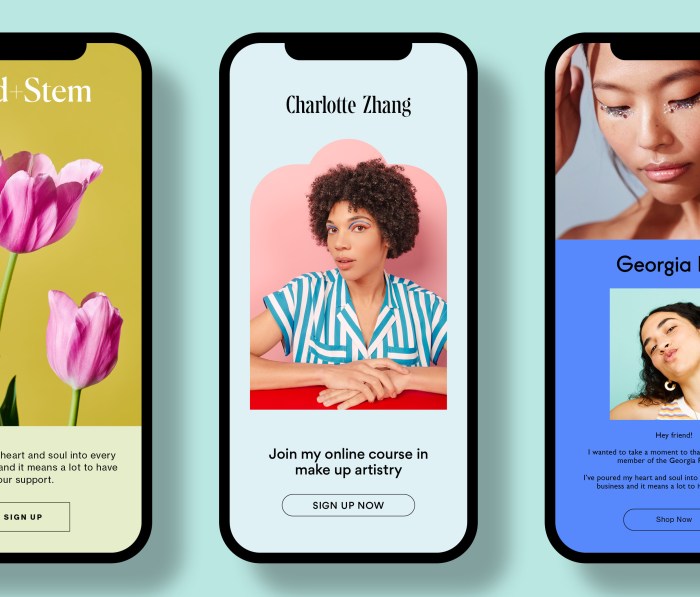
Crafting effective email copy for a product launch requires a strategic approach that resonates with your target audience. By focusing on the key benefits, highlighting the unique features, and addressing the problems your product solves, you can significantly improve your conversion rates. This involves carefully tailoring your message to different aspects of your product’s value proposition.
Email Copy Variations: Benefits, Features, and Problem-Solving
The following are three email body copy variations for a hypothetical tech gadget, the “ChronoSync,” a smart watch that optimizes daily schedules and promotes better time management. Each focuses on a different aspect of the product’s appeal.
Email 1: Focus on Benefits
Subject: Reclaim Your Time with ChronoSync
Body: Imagine a day where you’re effortlessly organized, stress-free, and accomplishing more than ever before. ChronoSync isn’t just a smartwatch; it’s your personal time management assistant. It intelligently schedules your day, sends timely reminders, and analyzes your productivity patterns to help you optimize your workflow. Experience less stress, more free time, and increased overall well-being with ChronoSync.
Email 2: Focus on Features
Subject: Introducing ChronoSync: The Smartwatch That Redefines Productivity
Body: ChronoSync boasts an array of cutting-edge features designed to streamline your life. Its intuitive interface allows for seamless scheduling and task management. The integrated AI analyzes your daily activities, learning your preferences and proactively suggesting optimal scheduling adjustments. Other features include advanced fitness tracking, contactless payment, and customizable watch faces. Experience the future of time management with ChronoSync’s innovative technology.
Email 3: Focus on Problem-Solving
Subject: Overwhelmed? ChronoSync is Your Solution.
Body: Feeling constantly rushed, disorganized, and struggling to manage your time effectively? ChronoSync understands. It’s designed to tackle the daily struggles of time management head-on, helping you regain control of your schedule and reduce stress. Say goodbye to missed deadlines and hello to a more productive, balanced life. ChronoSync is the answer you’ve been searching for.
Call-to-Action Phrases
Strong call-to-action phrases are crucial for driving conversions. The following are examples tailored to each email variation:
Email 1 (Benefits): “Claim your free time – Order your ChronoSync today!” “Limited-time offer: Get 20% off your ChronoSync – Shop Now!”
Email 2 (Features): “Explore the future of time management – Discover ChronoSync’s features now!” “Only 100 units left – Pre-order your ChronoSync before they’re gone!”
Email 3 (Problem-Solving): “Take control of your time – Get your ChronoSync today!” “Don’t miss out – Secure your ChronoSync while supplies last!”
Consistent Brand Voice and Tone
Maintaining a consistent brand voice and tone across all email communications is essential for building brand recognition and trust. A unified voice ensures that your messaging is clear, concise, and reflects your brand’s personality. For ChronoSync, a professional yet approachable tone, emphasizing efficiency and empowerment, would be appropriate across all email marketing materials. This consistency reinforces the brand’s message and builds a strong connection with customers.
Pre-Launch Email Sequence Strategy
A well-structured pre-launch email sequence is crucial for generating excitement and building anticipation for your product launch. By strategically releasing information and engaging your audience over time, you can cultivate a strong sense of anticipation that converts into strong sales on launch day. This sequence should focus on progressively revealing more about your product and its benefits, culminating in a compelling call to action.A five-email sequence allows for a measured release of information, avoiding overwhelming subscribers while maintaining consistent engagement.
Each email should have a clear purpose, building upon the previous one and progressively revealing more about the product and its value proposition. The key is to create a narrative that draws subscribers in and keeps them wanting more.
Email Sequence Breakdown
This section details the content and purpose of each email in a five-email pre-launch sequence, along with suggested subject lines. The goal is to gradually build anticipation and excitement for the product launch, ultimately driving conversions.
- Email 1: The Teaser
Subject: Get Ready for Something Big…
Content: This email introduces the upcoming launch without revealing the product itself. It focuses on creating intrigue and hinting at the problem your product solves. For example, you might share a compelling statistic about the problem your product addresses or tease a unique benefit. The call to action could be to join a waiting list or follow your social media for updates. - Email 2: Problem/Solution Highlight
Subject: Are You Frustrated With [Problem]?
Content: This email directly addresses the pain points your target audience experiences. It focuses on the problem your product solves and how it provides a superior solution. The email should build empathy with the audience by highlighting their frustrations and demonstrating understanding of their needs. The call to action could be to learn more by visiting a landing page. - Email 3: Product Reveal & Key Features
Subject: Introducing [Product Name] – The Solution You’ve Been Waiting For!
Content: This is where you reveal your product! Showcase the key features and benefits, focusing on how they address the problems highlighted in the previous email. Use high-quality visuals and concise language to keep the email engaging and easy to digest. The call to action could be to sign up for early access or a special launch offer. - Email 4: Social Proof & Testimonials
Subject: See What Others Are Saying About [Product Name]!
Content: This email builds trust and credibility by showcasing social proof. Include testimonials, reviews, or case studies that demonstrate the value of your product. This helps alleviate any skepticism and reinforces the product’s benefits. The call to action could be to read more testimonials or watch a product demo video. - Email 5: Launch Announcement & Final Call to Action
Subject: [Product Name] is LIVE! Get Yours Now!
Content: This email announces the official product launch! It includes a clear and compelling call to action, directing recipients to the purchase page. Consider offering a limited-time launch discount or bonus to incentivize immediate purchase.
Post-Launch Email Follow-Up
A successful product launch isn’t just about the initial announcement; it’s about nurturing ongoing engagement and gathering valuable feedback to inform future improvements and marketing strategies. A well-structured post-launch email sequence helps maintain momentum, builds customer loyalty, and provides crucial insights into product performance and user experience.Post-launch email campaigns should shift focus from solely promoting the product to fostering a relationship with customers.
This involves actively soliciting feedback, providing helpful resources, and offering personalized support. By actively engaging with your audience, you can build brand loyalty and gain valuable data to improve your product and marketing efforts.
Post-Launch Email Sequence Examples
The following three emails exemplify a strategy focused on customer engagement and feedback. These emails should be sent over a period of a week or two, allowing time for customer response and avoiding email overload.
- Email 1: Thank You and Quick Start Guide (Sent 1-2 days post-launch): This email thanks customers for their purchase and provides a quick start guide or helpful tutorial to get them started with the product. It might include a short video or links to relevant support articles. Example subject line: “Welcome to the [Product Name] Family! Your Quick Start Guide Awaits.”
- Email 2: Feedback Request and Incentive (Sent 5-7 days post-launch): This email directly solicits feedback through a short survey or feedback form. Offering a small incentive, such as a discount on a future purchase or entry into a prize draw, can significantly increase response rates. Example subject line: “Share Your Thoughts & Win! Help Us Improve [Product Name]”.
- Email 3: Addressing Feedback and Next Steps (Sent 10-14 days post-launch): This email summarizes the feedback received, highlights key improvements planned based on customer input, and previews future updates or features. It reinforces the value of customer feedback and strengthens the customer-brand relationship. Example subject line: “Your Feedback Matters: Updates and Future Plans for [Product Name]”.
Customer Feedback Survey
A well-designed survey is crucial for gathering actionable insights. The survey should be concise and focused on key areas to maximize response rates and data quality.
- Overall satisfaction with the product: (Rating scale: 1-5 stars)
- Ease of use: (Rating scale: 1-5 stars, and open-text field for comments)
- Most valuable feature: (Multiple choice or open-text)
- Areas for improvement: (Open-text field)
- Effectiveness of the email campaign: (Rating scale: 1-5 stars, and open-text field for suggestions)
- Would you recommend this product to a friend? (Yes/No)
Post-Launch Email List Segmentation Strategy
Segmenting your email list based on post-launch engagement allows for highly personalized communication. This improves campaign effectiveness and fosters stronger customer relationships.
- Engagement Level: Segment customers based on email opens, clicks, and survey responses. High engagement indicates strong interest and provides an opportunity for targeted upselling or cross-selling. Low engagement might require additional nurturing or personalized support.
- Feedback Provided: Customers who provided detailed feedback can be targeted with communications showcasing how their input is being used to improve the product. This demonstrates responsiveness and builds loyalty.
- Product Usage: If your product allows for tracking usage data, segment customers based on frequency and features used. This allows for targeted communications showcasing advanced features or highlighting relevant use cases.
Analyzing Campaign Performance and Optimization
Understanding the effectiveness of your product launch email campaign is crucial for future success. Analyzing key performance indicators (KPIs) allows you to identify what worked well and what needs improvement, ultimately leading to higher conversion rates and a stronger return on investment. This analysis should be a continuous process, informing iterative improvements to your email strategy.Analyzing the data gathered from your campaign provides invaluable insights into customer behavior and engagement.
By focusing on specific metrics and interpreting their trends, you can pinpoint areas for optimization, resulting in more effective future campaigns. This data-driven approach is essential for maximizing the impact of your email marketing efforts.
Key Metrics for Campaign Success
Three key metrics provide a comprehensive overview of your product launch email campaign’s performance: open rates, click-through rates, and conversion rates. Open rate indicates the percentage of recipients who opened your email. Click-through rate (CTR) measures the percentage of recipients who clicked on a link within your email. Conversion rate tracks the percentage of recipients who completed a desired action, such as making a purchase or signing up for a trial.
Tracking these metrics provides a holistic view of campaign effectiveness.
Interpreting Data and Identifying Areas for Improvement
High open rates suggest a compelling subject line and effective pre-launch engagement. Low open rates may indicate problems with your subject line, sender reputation, or list segmentation. A high click-through rate suggests engaging email content and clear calls to action. Low CTRs might indicate poor email design, unclear messaging, or irrelevant content. Finally, a high conversion rate signifies successful messaging and a clear path to conversion.
Low conversion rates could point to issues with your landing page, checkout process, or the overall value proposition. For example, if your open rate is low, but your click-through rate is high among those whodid* open the email, your subject line needs work. Conversely, a high open rate with a low click-through rate suggests your email content isn’t engaging enough.
A/B Testing Plan for Optimization
A/B testing is essential for optimizing email campaign performance. This involves sending two versions of your email to segmented audiences and comparing their performance based on the key metrics discussed above. A systematic approach to A/B testing should be implemented, focusing on one element at a time.For example, you could A/B test different subject lines (e.g., “Introducing [Product Name]” vs.
“[Product Name]: Solve Your Problem!”). You might also test variations in email copy, focusing on different calls to action (e.g., “Shop Now” vs. “Get Your Free Trial”). A further area for testing is the overall email design and layout, experimenting with different visuals and layouts to see which drives the most engagement. By carefully analyzing the results of these tests, you can refine your email strategy and improve your overall campaign performance.
For instance, if one subject line significantly outperforms another, you’ve identified a stronger approach for future campaigns. Similarly, testing different calls to action can reveal which phrasing is most effective in driving conversions.
PRODUCT INNOVATION & PRODUCT LAUNCH
Aligning your product innovation messaging with your product launch email campaign is crucial for maximizing impact and generating excitement. A cohesive strategy ensures your target audience understands the value proposition and the problem your product solves, leading to higher conversion rates. Inconsistency between the product’s core features and the email campaign’s narrative can confuse potential customers and hinder sales.The success of your launch hinges on clearly communicating the innovative aspects of your product.
This requires a well-defined strategy that highlights key features and benefits in a way that resonates with your target audience. This involves careful consideration of your audience’s needs and preferences, tailoring the message accordingly to address their pain points and demonstrate how your product provides a solution.
Visual Representation of Key Product Innovations in Email Campaign
Imagine a three-panel email design. The first panel features a compelling headline, such as “Introducing the Future of [Product Category]: [Product Name]”. Below the headline, a short, impactful paragraph summarizes the product’s core value proposition, focusing on the problem it solves and the key benefit it delivers. This panel uses a high-quality image or video showcasing the product in action.The second panel highlights three key innovations.
Each innovation is represented by a distinct icon (e.g., a lightning bolt for speed, a shield for security, a brain for intelligence) accompanied by a concise bullet point describing the innovation and its benefit. For example: “Blazing Fast Speeds: Experience unparalleled performance with our revolutionary new engine.” “Unbreakable Security: Rest assured knowing your data is protected by our advanced encryption technology.” “Intuitive Design: Effortlessly navigate our user-friendly interface.”The final panel features a strong call to action, such as “Learn More” or “Get Started Today,” with a button linking to the product website.
The overall design is clean, modern, and visually appealing, using a consistent color scheme and brand imagery. The use of whitespace ensures the message isn’t cluttered, allowing the key innovations to stand out.
Messaging Strategies: Revolutionary vs. Incremental Improvement
Launching a revolutionary product demands a different messaging strategy than launching an incremental improvement. For a revolutionary product, the focus should be on disrupting the market and establishing a new standard. The messaging should emphasize the transformative nature of the product and its ability to solve a significant problem in a completely new way. Think of the initial iPhone launch—the messaging focused on its groundbreaking touchscreen interface and app ecosystem, highlighting a paradigm shift in mobile technology.
The language is bold, aspirational, and focuses on the future.Conversely, launching an incremental improvement requires a different approach. The messaging should highlight the specific improvements and enhancements over the previous version, emphasizing the added value and convenience they provide. The language should be more measured and factual, focusing on the tangible benefits and addressing specific customer pain points the improvement solves.
For example, the messaging for a new version of productivity software might focus on improved speed, enhanced collaboration features, and a more intuitive user interface, building upon existing user familiarity. The emphasis is on refinement and efficiency, rather than complete disruption.
A successful product launch email campaign requires a multi-faceted approach, blending creative messaging with strategic planning and data-driven optimization. By carefully defining target audiences, crafting compelling email copy, strategically sequencing communications, and meticulously analyzing campaign performance, businesses can significantly enhance their product launch success and cultivate strong customer relationships. Continuous refinement through A/B testing and data analysis is essential for maximizing return on investment and ensuring long-term campaign effectiveness.
Questions Often Asked
What is the ideal email frequency for a product launch campaign?
There’s no one-size-fits-all answer. Frequency depends on your audience, product type, and campaign goals. A pre-launch sequence might be more frequent, while post-launch emails should be less frequent to avoid overwhelming recipients.
How can I ensure my emails don’t end up in spam folders?
Maintain a clean email list, use a reputable email service provider, avoid spam trigger words, and ensure your emails have a clear unsubscribe option. Regularly monitor your sender reputation.
What are some effective ways to measure the ROI of my email campaign?
Track key metrics like open rates, click-through rates, conversion rates, and revenue generated directly attributable to the campaign. Compare these metrics against your campaign budget and marketing goals.


