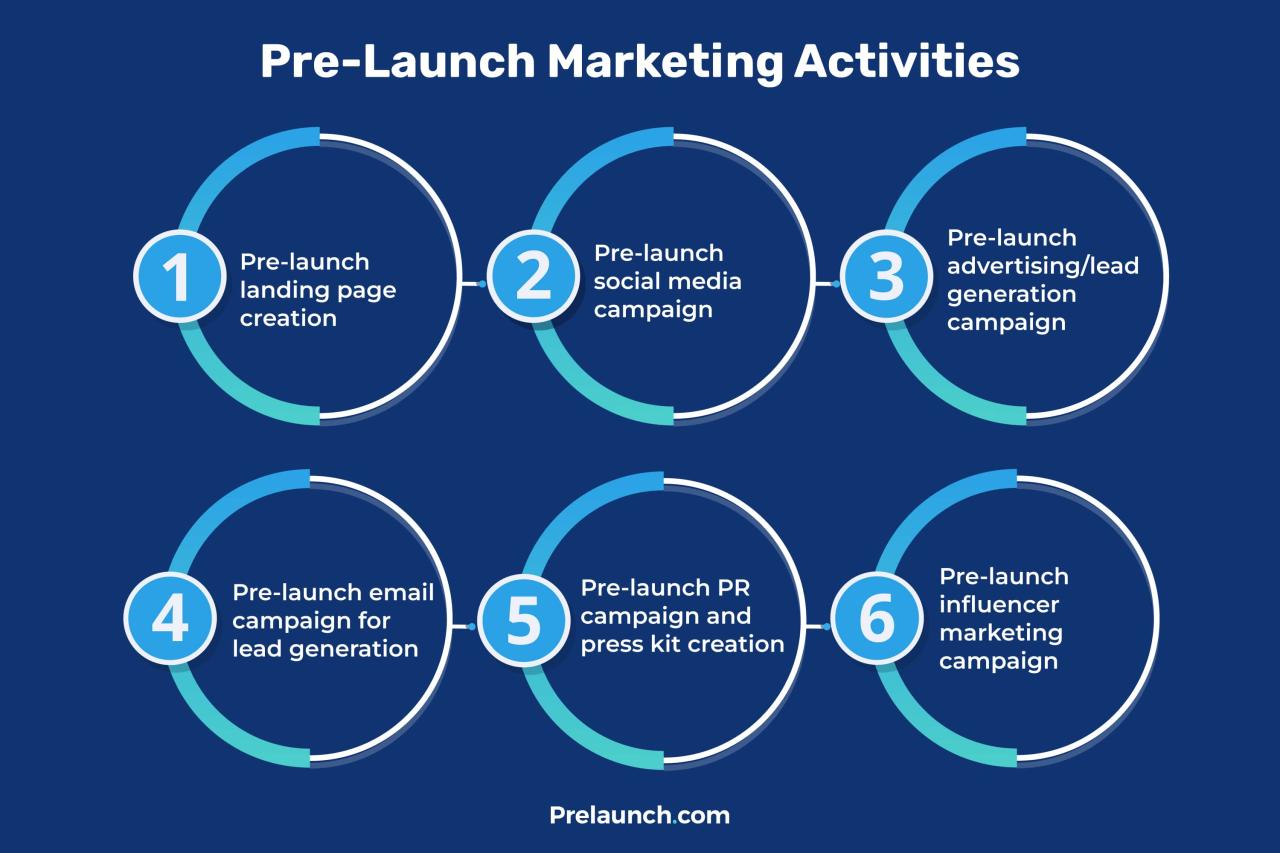
Successfully launching a product requires meticulous planning and execution, and pre-launch marketing plays a pivotal role. This crucial phase sets the stage for a successful product debut, transforming potential customers into eager buyers. By strategically building anticipation and generating excitement, pre-launch marketing can significantly impact a product’s initial market penetration and long-term success.
This exploration delves into the multifaceted strategies involved in preparing for a product launch. From defining clear goals and identifying your target audience to leveraging various marketing channels and measuring campaign effectiveness, we will examine the essential components of a robust pre-launch marketing plan. Understanding these strategies is key to maximizing your product’s potential and achieving a successful market entry.
Defining Pre-Launch Marketing Goals
Effective pre-launch marketing hinges on setting clear, measurable goals. Without defined objectives, efforts become scattered and results difficult to assess. A well-defined goal provides direction, motivates the team, and allows for accurate measurement of campaign success.Pre-launch marketing goals should be SMART: Specific, Measurable, Achievable, Relevant, and Time-bound. This ensures that the campaign is focused, its progress can be tracked, and its success can be definitively determined.
SMART Goals for a Mobile Game Pre-Launch Campaign
Three SMART goals for a pre-launch mobile game marketing campaign could be:
- Achieve 10,000 pre-registrations on the app store within one month of launching the pre-registration campaign. This is specific, measurable, achievable (depending on the marketing budget and strategy), relevant (pre-registrations indicate potential player base), and time-bound.
- Generate 5,000 social media engagements (likes, shares, comments) across all platforms within two weeks of the trailer release. This is specific, measurable, relevant (indicates audience interest and virality), and time-bound. The achievability depends on the quality of the trailer and the marketing strategy employed.
- Secure features in three major gaming news websites or blogs within the pre-launch period. This is specific, measurable (number of features), relevant (increases brand awareness and reach to a target audience), and time-bound (pre-launch period).
Pre-Launch Marketing Strategy for a Sustainable Fashion Brand
A pre-launch marketing strategy for a sustainable fashion brand should focus on building anticipation and generating leads by emphasizing the brand’s ethical and environmental commitment. This can be achieved through a combination of strategies emphasizing transparency, storytelling, and community building.The strategy should highlight the brand’s unique selling proposition (USP), which in this case, would be its commitment to sustainability.
This could involve showcasing the materials used, the production process, and the brand’s positive impact on the environment and society.Content marketing, focusing on blog posts, articles, and social media updates about sustainable fashion, ethical sourcing, and the brand’s story, would be crucial. Influencer marketing, collaborating with eco-conscious influencers, can also significantly amplify the brand’s message and reach a wider audience.
Exclusive pre-launch offers and early access to the collection for email subscribers can incentivize lead generation.
Measuring the Success of a SaaS Pre-Launch Email Marketing Campaign
A detailed plan to measure the success of a SaaS pre-launch email marketing campaign requires a multi-faceted approach. Key performance indicators (KPIs) should be established before the campaign begins to ensure that the results are measurable and relevant.
- Open rates: Track the percentage of recipients who opened the email. A low open rate might indicate issues with subject lines or sender reputation. Benchmarking against industry averages is important.
- Click-through rates (CTR): Monitor the percentage of recipients who clicked on links within the email. A low CTR could suggest that the email content wasn’t engaging enough or the call-to-action wasn’t clear.
- Conversion rates: Measure the percentage of email recipients who completed a desired action, such as signing up for a free trial or requesting a demo. This is a crucial indicator of the campaign’s effectiveness in generating leads.
- Unsubscribe rates: Track the percentage of recipients who unsubscribed from the email list. High unsubscribe rates might signal irrelevant content or overly frequent emails. Analyzing the reasons for unsubscribing (if possible) is vital for future improvements.
- Lead generation cost: Calculate the cost per lead (CPL) by dividing the total marketing spend by the number of leads generated. This helps to assess the efficiency of the campaign.
Analyzing these KPIs, along with A/B testing different email subject lines, content, and calls to action, provides valuable insights for optimizing future email campaigns and improving overall marketing strategy.
Identifying Your Target Audience
Understanding your target audience is paramount for a successful pre-launch marketing campaign. A well-defined target audience allows for focused messaging, efficient resource allocation, and ultimately, higher conversion rates. By creating detailed buyer personas and segmenting your audience, you can tailor your marketing efforts to resonate with specific groups, maximizing your impact and return on investment.
Buyer Personas for Organic Skincare Products
To effectively market a new line of organic skincare products, we need to develop detailed buyer personas. These personas will represent our ideal customers, encompassing their demographics, psychographics, needs, and motivations. This allows for targeted messaging that speaks directly to their concerns and aspirations.
- Persona 1: The Eco-Conscious Millennial: Age 25-35, female, environmentally conscious, values sustainability and ethical sourcing. Motivated by natural ingredients, cruelty-free practices, and a desire for healthy, radiant skin. Likely to research products extensively online and read reviews before purchasing. Her needs include effective skincare solutions that align with her values, alongside transparent and readily available information regarding product sourcing and manufacturing.
- Persona 2: The Busy Professional: Age 35-50, both male and female, high-income earners, value convenience and efficiency. Motivated by time-saving products that deliver visible results. Needs include fast-acting, high-quality skincare with minimal steps in their routine. They appreciate premium packaging and a streamlined online purchasing experience.
- Persona 3: The Health-Conscious Parent: Age 30-45, female, prioritize their family’s health and well-being. Motivated by natural, safe ingredients, free from harsh chemicals and potential irritants. Needs include gentle, effective skincare suitable for sensitive skin, particularly for children. They are highly responsive to positive reviews and recommendations from trusted sources.
Survey Design for a Fitness Tracker
To gather data on the target audience for a revolutionary fitness tracker, a well-structured survey is crucial. The survey should be concise, easy to understand, and focused on collecting relevant information about potential users’ needs, preferences, and motivations.
The survey will incorporate both quantitative and qualitative data collection methods. Quantitative data will be gathered through multiple-choice questions, rating scales, and demographic information. Qualitative data will be obtained through open-ended questions allowing for more detailed feedback. The survey will include questions addressing:
- Demographics: Age, gender, occupation, income level, location.
- Fitness Habits: Current activity level, fitness goals, preferred workout types.
- Technology Usage: Smartphone usage, app preferences, experience with wearable technology.
- Feature Preferences: Desired features in a fitness tracker (e.g., heart rate monitoring, sleep tracking, GPS), preferred design aesthetics.
- Price Sensitivity: Willingness to pay for specific features and overall price point.
- Open-ended Feedback: Overall thoughts on fitness trackers, unmet needs, and suggestions for improvement.
Target Audience Segmentation for Electric Vehicles
Segmenting the target audience for electric vehicles (EVs) allows for tailored marketing strategies that resonate with specific consumer groups. This segmentation will focus on three distinct groups, each with unique characteristics and motivations.
- Segment 1: The Early Adopter: This group is typically tech-savvy, environmentally conscious, and possesses a higher disposable income. They are eager to embrace new technologies and are willing to pay a premium for the latest innovations. Marketing to this segment should emphasize cutting-edge technology, sustainability, and performance features.
- Segment 2: The Practical Buyer: This group is primarily motivated by cost savings and practicality. They are interested in EVs due to lower running costs and potential government incentives. Marketing to this segment should focus on the long-term financial benefits, ease of maintenance, and affordability compared to traditional vehicles. Real-world examples of cost savings and lower running costs should be presented.
- Segment 3: The Environmentally Conscious Consumer: This group is strongly motivated by environmental concerns and a desire to reduce their carbon footprint. Marketing to this segment should emphasize the environmental benefits of EVs, highlighting their reduced emissions and contribution to a greener future. Data on reduced carbon emissions and the positive environmental impact of driving an EV should be prominent.
Pre-Launch Email Marketing
Email marketing is a crucial component of any successful pre-launch strategy. A well-crafted email sequence can effectively nurture leads, build anticipation, and ultimately drive conversions when your product launches. By strategically segmenting your audience and delivering targeted messages, you can maximize engagement and achieve a higher return on your marketing investment.Effective pre-launch email marketing involves creating a series of automated messages designed to engage your audience over time, building excitement and encouraging them to take action.
This process goes beyond simply announcing your product; it’s about cultivating relationships and positioning your product as a solution to their needs.
Automated Email Sequence for Lead Nurturing
A well-structured automated email sequence is essential for nurturing leads and driving pre-launch excitement. Each email should have a clear purpose, whether it’s providing valuable content, building anticipation, or encouraging pre-orders. The timing of these emails is also crucial, with a balance between frequent enough to stay top-of-mind but not so frequent as to annoy recipients. A typical sequence might span several weeks, building anticipation until the launch date.
Email Templates: Welcome Series, Product Announcement, and Post-Launch Follow-Up
Creating compelling email templates is key to a successful pre-launch campaign. A welcome series should introduce your brand and offer valuable content, perhaps a lead magnet or early access to exclusive information. The product announcement email should highlight key features and benefits, accompanied by compelling visuals. Finally, a post-launch follow-up email should thank customers for their purchase and provide additional resources or support.For example, a welcome series might consist of three emails: Email 1: Introduces the brand and offers a free ebook related to the product’s benefits.
Email 2: Highlights a problem the product solves and showcases testimonials. Email 3: Provides a sneak peek of the product’s key features. The product announcement email could feature high-quality images or a short video showcasing the product in action. The post-launch email might include a link to a tutorial or a FAQ page.
Early Bird Discount and Exclusive Access Email Campaign
Offering early bird discounts and exclusive access can significantly boost pre-orders and create a sense of urgency. This strategy incentivizes early adoption and generates valuable feedback before the official launch. The email campaign should clearly communicate the benefits of early access and the limited-time nature of the offer. For instance, an email could offer a 20% discount for pre-orders placed within the first week, along with exclusive early access to the product and beta features.
This approach encourages immediate action and fosters a sense of community among early adopters. Examples of successful early bird campaigns include those run by software companies offering access to beta versions of their software in exchange for feedback, or subscription box services offering discounted pricing to early subscribers.
In conclusion, a well-executed pre-launch marketing strategy is not merely a precursor to a product launch; it is the foundation upon which success is built. By carefully considering each element – from defining clear objectives and understanding your audience to leveraging diverse marketing channels and meticulously tracking results – businesses can cultivate a powerful launch campaign. This proactive approach ensures that the product launch generates significant buzz, attracts a substantial customer base, and positions the product for lasting market success.
Essential FAQs
What is the ideal duration for a pre-launch marketing campaign?
The ideal duration varies depending on the product, industry, and target audience. Generally, campaigns range from a few weeks to several months.
How can I measure the ROI of my pre-launch marketing efforts?
Track key metrics such as website traffic, lead generation, social media engagement, and email open/click-through rates. Compare these metrics to your marketing spend to calculate ROI.
What are some common pre-launch marketing mistakes to avoid?
Common mistakes include neglecting audience research, focusing too heavily on one channel, failing to track results, and not having a clear call to action.
How can I adapt my pre-launch strategy for different product types?
Tailor your messaging and channels to resonate with your specific target audience and the unique aspects of your product. For example, a SaaS product might benefit from webinars and demos, while a consumer good might leverage influencer marketing.


